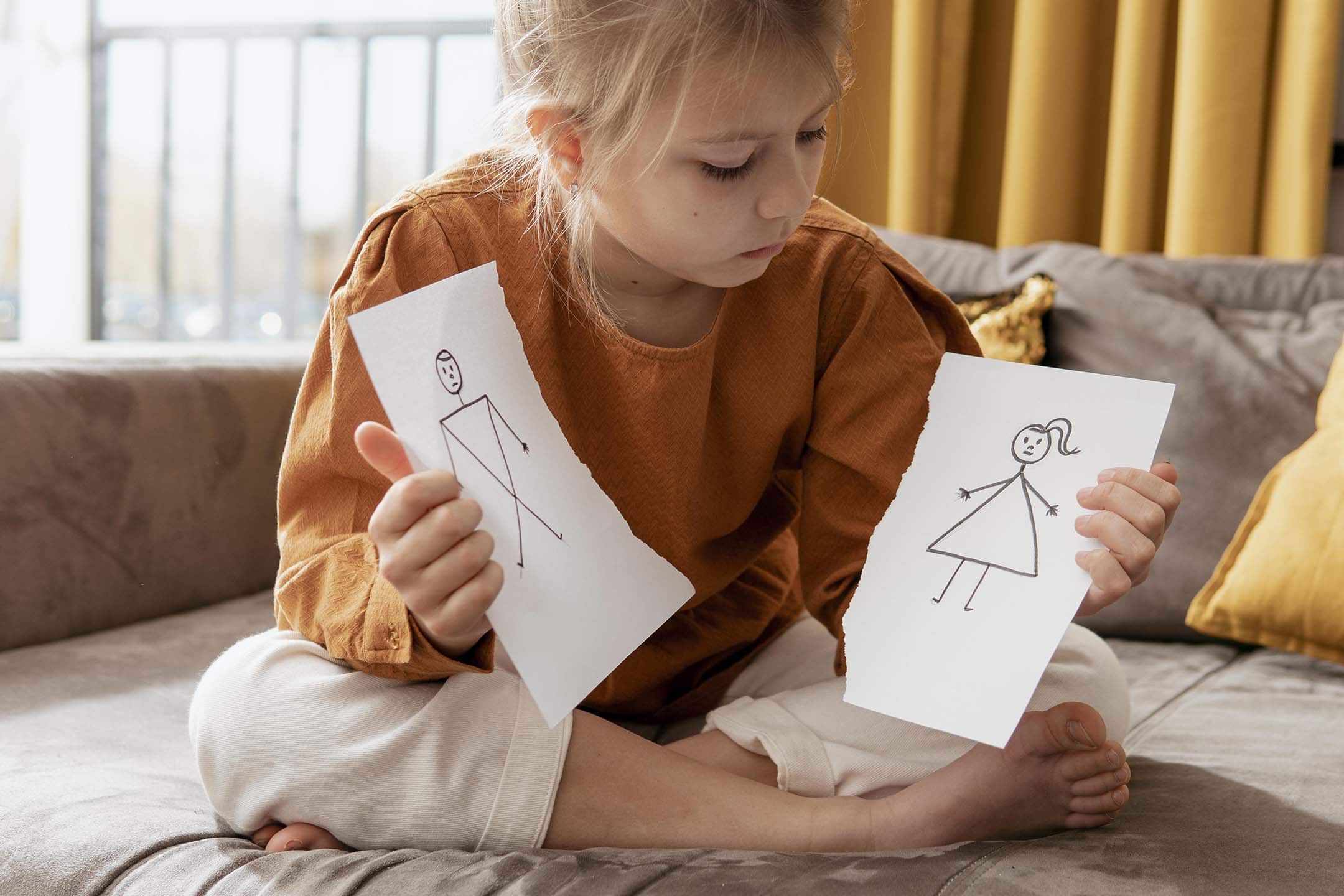
The Family Justice System has been no stranger to criticism. Increasing delays and increasing costs have resulted in many parents feeling disenfranchised from a system that is often the last resort to resolve matters of contact and residence. The delayed outcome for children has meant that they have been in limbo during difficult and stressful proceedings for much longer than is necessary.
When the paramount consideration of the Court in children proceedings is the welfare of the child, it is not surprising that the Ministry of Justice held significant concerns as to how the child’s voice was seemingly missing from private law children proceedings. These concerns, coupled with how the Court managed cases involving serious allegations of domestic abuse and other offences, led to a report being commissioned by the Ministry of Justice, to identify the challenges faced in the Family Justice System, and the best way to resolve these challenges.
The Harm Panel Report 2020 sought to address these concerns, particularly in respect of how a child’s voice in private child law proceedings could be promoted. The key recommendation from the Report was that the Family Justice System should adopt a procedure to ensure that cases are dealt with in a safety focussed and a trauma-aware, manner, whilst also seeking to reduce the length of proceedings with the child’s voice at the centre.
Following the 2020 Report, the Private Law Pathfinder was established. Whilst initially piloted from February 2022 in Family Courts in North Wales and Dorset, the pilot soon expanded to 10 Court areas.
However, in March 2026, it was announced that the Pathfinder would be rolled out across all of England and Wales across a three-year period under the new Child Focused Courts model. But the question remains, what does this mean for families involved in private child law proceedings?
Prior to the inception of the Pathfinder Pilot, children would often have little to no involvement in proceedings. A child may only be spoken to directly to have their views ascertained if the Court ordered a section 7 report to be completed. Even then, a section 7 report was typically ordered after many hearings, several months into the proceedings. However, the Child Focused Courts model seeks to change this.
Under the Child Focused Courts model, Cafcass (Children and Family Court Advisory and Support Service) or the Local Authority, if already involved with the family, will often be requested by the Court to prepare a document called a Child Impact Report.
The Court will ask for this Child Impact Report to be completed before the parents even step foot into a courtroom following an application being made. Typically, the Court will ask that a professional completes the Child Impact Report before an in-person hearing is listed.
The purpose of the Child Impact Report is essentially an information gathering exercise, to provide the Court with as much information as possible, before the parents are invited to Court. A professional will meet with the parents separately, as well as the child, to ascertain:
- What life is like for the child.
- A summary of any Local Authority and Police record checks.
- A summary of any previous Court proceedings.
- A school’s view on the child and the family’s situation, if applicable.
- The parent’s views of the situation.
- And significantly, the child’s views on their living/contact arrangements, and what they seek.
The professional completing the report will then analyse the above information and either:
- Make recommendations to the Court for a Final Order; or
- Make recommendations to the Court as to what other information is required/action needed in order to progress the case, such as a testing period of contact, drug/alcohol testing, domestic abuse support etc.
The goal of the above approach is to place the child’s wishes and feelings at the centre of the proceedings at the very beginning, before the first attended hearing has even taken place. By directly obtaining the child’s wishes and feelings at the outset of the proceedings, it is hoped that the voice of the child will be heard and allow them to feel as though they have more of a role in decisions that will be made about their own life. This is particularly significant, given that the child’s welfare is the paramount consideration of the Court in such proceedings.
The Child Focused Courts model also ensures that the Court already has a great deal of information about a family to assist in dealing with the matter more efficiently. This will ideally reduce the length of proceedings significantly for families across England and Wales, as the number of hearings within proceedings are anticipated to reduce. It is hoped that this will provide security for children sooner, whilst also minimising the emotional impact of parents involved, given that proceedings are often a stressful and difficult time for all parties.